This article was first published in the IGPG Newsletter in February 2024.
A Gallery of the images Ian supplied can be seen at the bottom of this page. (click on an image to see it larger).
You may well have seen a number of black and white pictures from Ian posted within the group of the last few weeks. He has kindly sent us the negatives. I have scanned them in and given them a tweak in Photoshop and they are looking very good. All the photographs he has supplied will be on show at the forthcoming IGPG Photo Competition Exhibition. Hopefully some of you might help to identify the meeting and the people and cars in the pictures.
Ian, who is now in his 80’s sent me a long email about his involvement at Goodwood and his subsequent emigration to Canada.
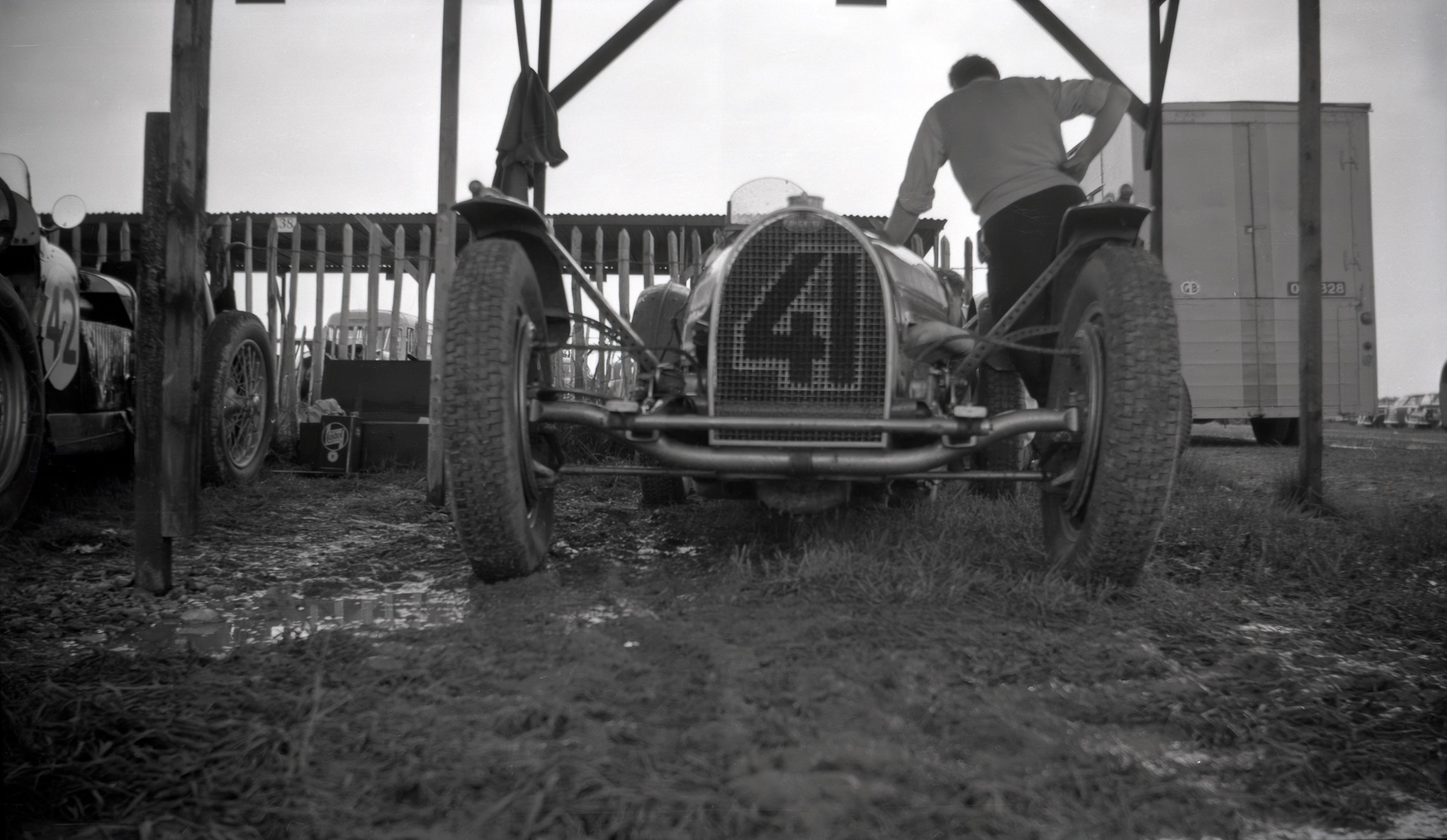
“As a boy I was interested in motorcycles and cars, but my parents did not want me to be a “greasy mechanic” and my father got me a job as a trainee in the display department of Bobbys of Eastbourne. I then moved to the display dept of Caffyns garage that had several branches in Sussex, ( now I am at least working for a garage). Caffyns had a small trailer and Land Rover that was loaned to groups for special events, one of the groups was The Bentley Drivers Club and of course I volunteered to drive it. The BDC asked me to help with this and other events and that is when I took some of the photos.
My best friend’s father was a BARC member and used to give us Goodwood race paddock passes, we also used to go to some of the practice days. Often we would try to sneak into the pits, security was not so tight back then, no barcodes on passes or scanners. I remember that on one occasion, I was close to the Ferrari pit when I saw a mechanic struggling to roll two wheels. I seized the opportunity and offered to take one and rolled it into the pit. I was trying to keep a low profile when a very attractive woman asked me for a light, we were chatting when Peter Collins came and said “there you are Louise I was wondering where you were” she replied this nice young man is keeping me company” and, as I was seen chatting with Peter and Louise I was able to stay in the pit. Also, I made several trips to Goodwood in the Equrie Etoile Team Bus, I posted a writeup and pictures of The Bus and have received a lot of interesting responses.
Fast forward to 1968 I was married with two sons and we emigrated to Canada, I accepted a job offer in Thompson Manitoba. Thompson was a brand new town with a population of 25 thousand that had been built to support the world’s largest Nickel mining, smelting and refining operation, together with a large Hydroelectric generating station. I bought a big old Chevrolet car and, leaving my family with relatives in Winnipeg, set off on the 1,000 kilometre drive north, to Thompson. The first 500 kilometres were on a paved road the rest was on a gravel road that was still under construction. Some sections of the road were so bad that they would chain 5 cars together and a Caterpillar tractor would drag them through the section.
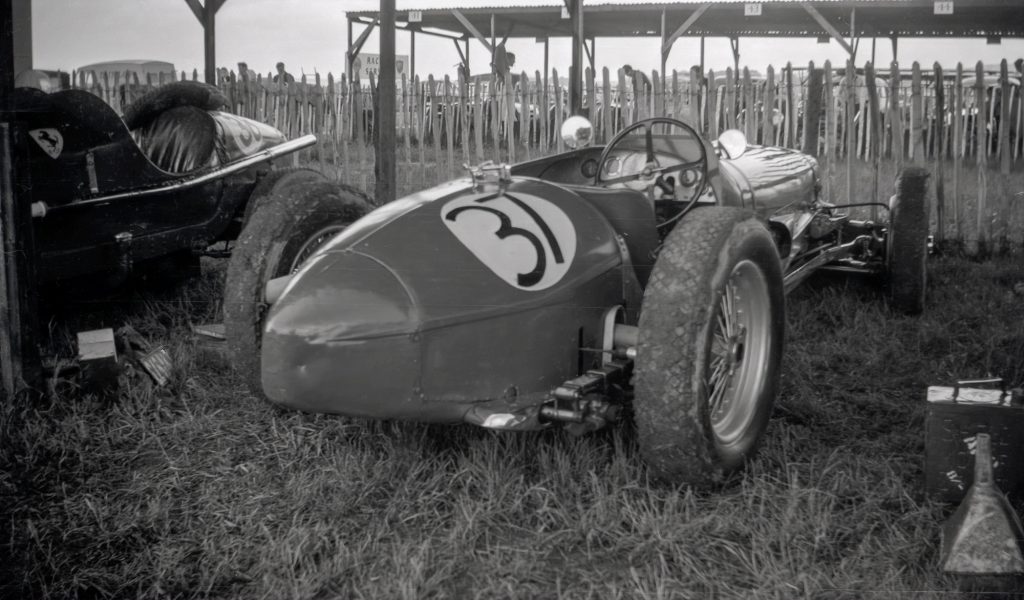
I worked servicing and repairing all types of vehicles and equipment from chainsaws to Caterpillar tractors, compressors, rock drills, cars, trucks, snowmobiles etc. INCO the International Nickel Corporation hired workers from the UK and Europe, many were young miners from England. Wages were high and there was lots of overtime and the young miners were buying all types of cars, trucks, motorcycles, boats, snowmobiles etc. The cars were mostly American Muscle cars or British sports cars MGs, Triumphs, Rovers, Mini Coopers and even a Lotus Elan. There were also Triumph, BSA and Norton motorcycles. The cars and bikes would be shipped to Thompson by railway. I think that I was the only mechanic in town willing and able to work on this “foreign S..T”, often the work that in fact I was doing would be covered by the manufactures warranty. I was working fourteen hours per day six days per week and making lots of money.
The owner of a mining and construction equipment rental company had six sons who liked British cars and started a British Leyland dealership, he needed a mechanic who could work on both cars and heavy equipment and asked me to come and work for him. The company also processed all the scrap metal from the mine and premises were in a scrap yard. The pay they were offering was good but I was not so sure about the workshop set up, they told me that this was a temporary arrangement and that they were erecting a new building. I noticed an older MGB in the yard and went to look at it, the owner said to me if you come to work for me I will give you the car, I accepted the offer. Later they added Volvo cars.

Most vehicles and particularly British cars were not designed or built to operate in the local conditions, there were only 30 KM of paved roads, the rest were rough gravel and very dusty and the temperature in winter went down to minus 45 degrees celsius. Getting any vehicle to start and run in those temperatures is a challenge.
Starting vehicles in temperatures below minus 10 degrees C without preheating is difficult, we used to install electric heating elements in the engine block or the cooling system. Batteries also needed to be heated as the ability to both produce power and accept charge is drastically reduced at low temperatures and the electrolyte in a partially charged battery will freeze and split the battery case. Engine, transmission and differential lubricating oils become very viscous at low temperatures. If the lubricating oil in the engine sump is too viscous the oil pump cannot move it to lubricate bearings and valve gear, so, even if you manage to start the engine it will take some time for the oil to warm up where it will flow and can result in excessive wear and seizures. Oil pan heaters were installed to overcome this problem. The introduction of synthetic and semi synthetic lubricants in the 70s helped solve the lubrication problems.
Providing adequate interior heat for both comfort and windshield defrosting was another major problem, plug in electric interior heaters helped to prevent the interior temperature getting too low and it was necessary to let the engine run to build heat before driving. Stick on plastic frost shields that helped to provide frost free areas on windows but distorted vision. Bias ply tyres would freeze overnight creating a flatspot at the bottom which made it difficult to get the wheels to rotate and when you were able to move you had a rough ride until the tyre warmed up. Radial ply tires helped solve this problem. I then moved to Manitoba Hydro, the provincial electrical corporation where, starting as a mechanic ending up as the equipment supervisor.
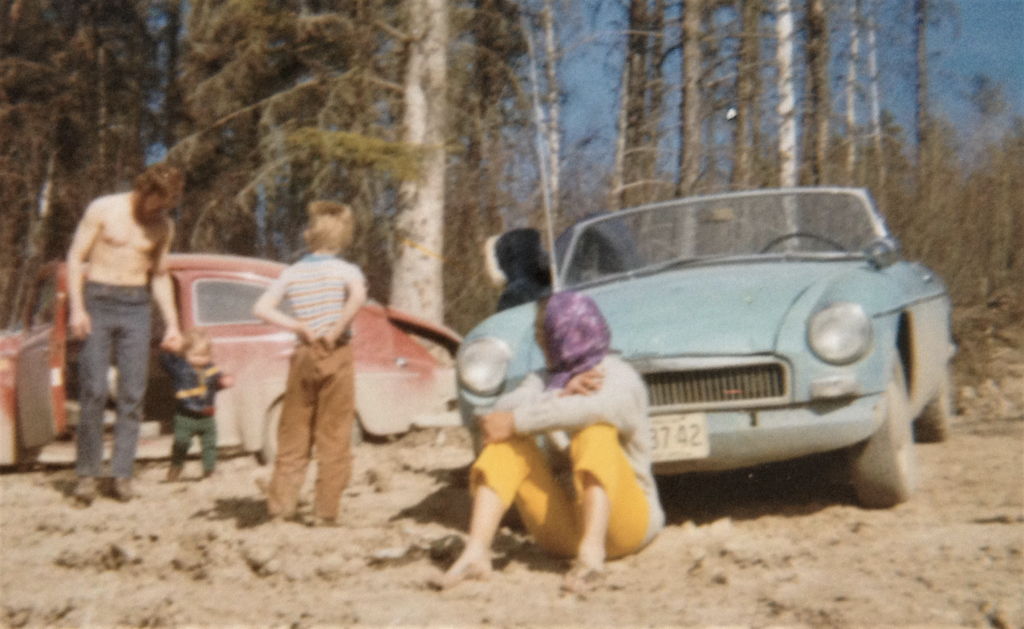
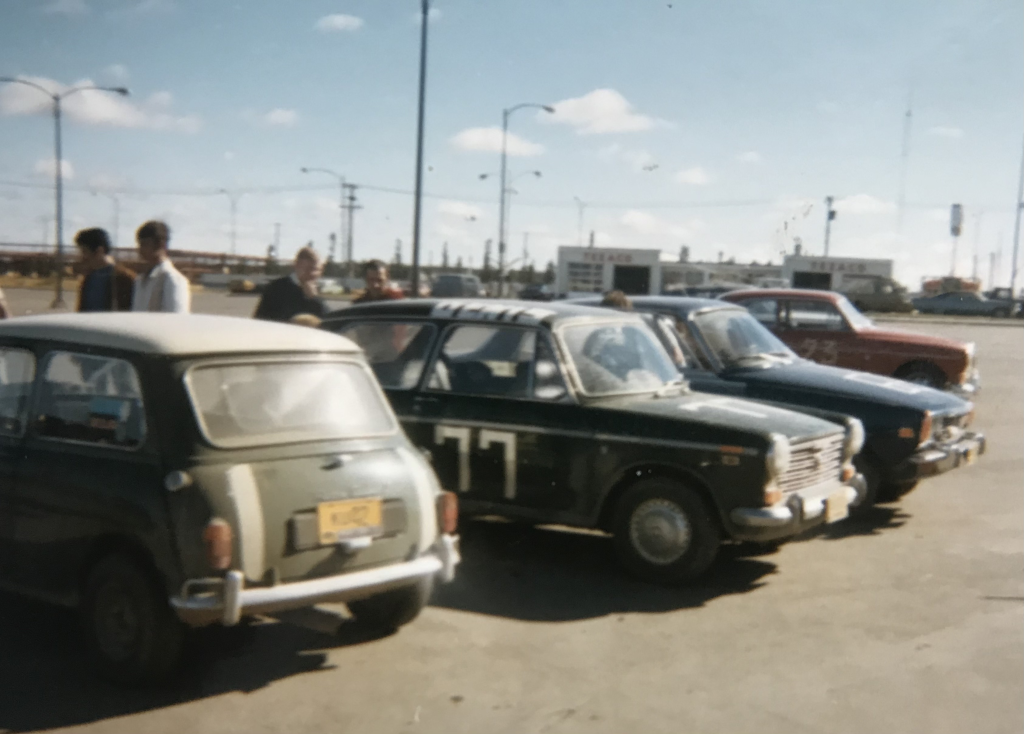
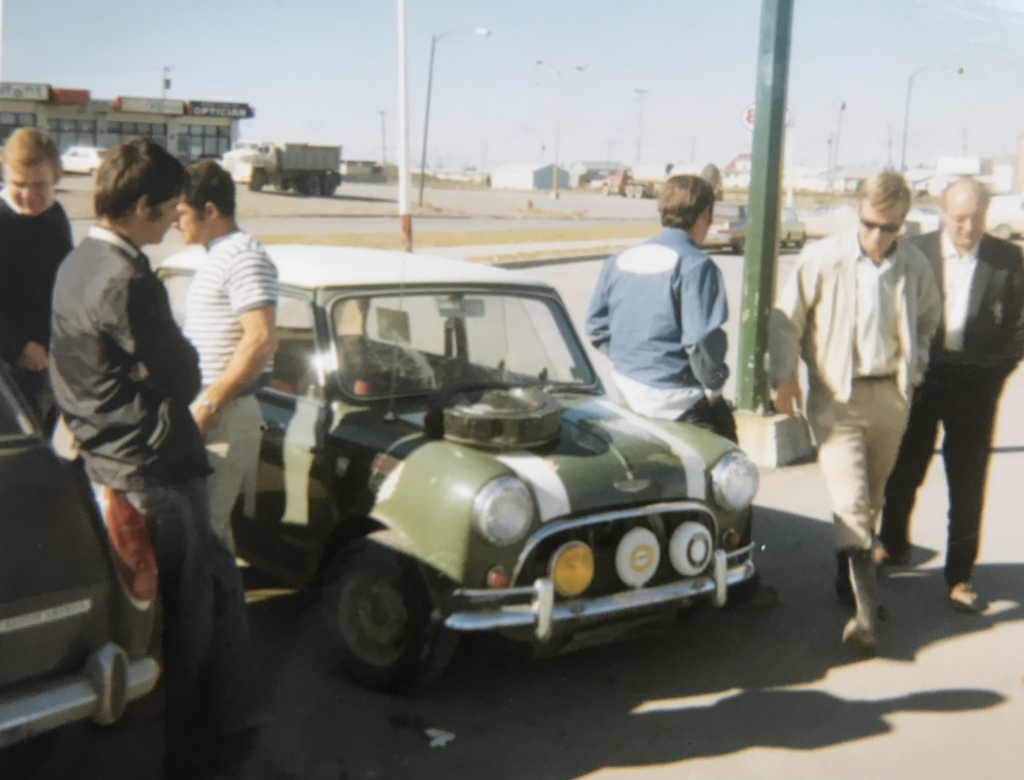
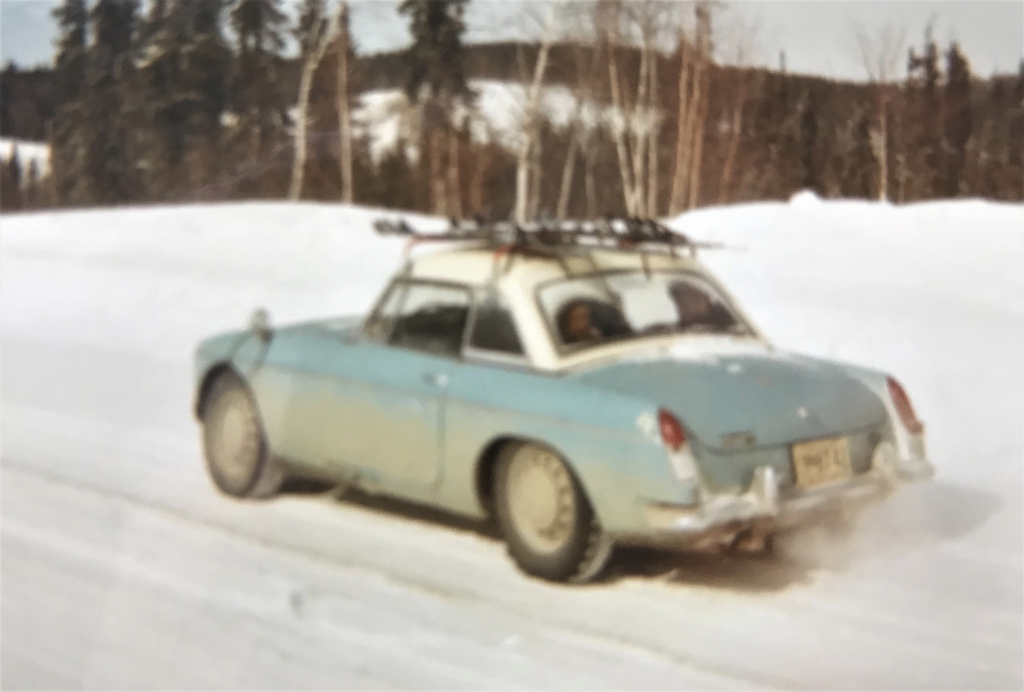
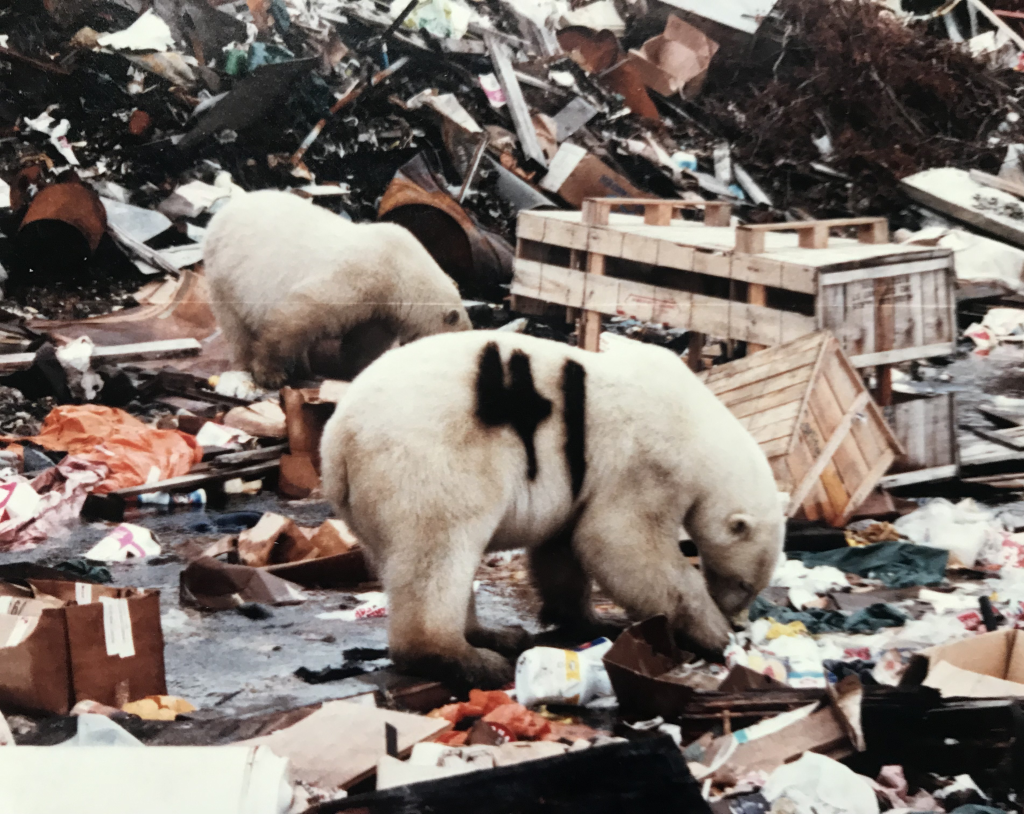
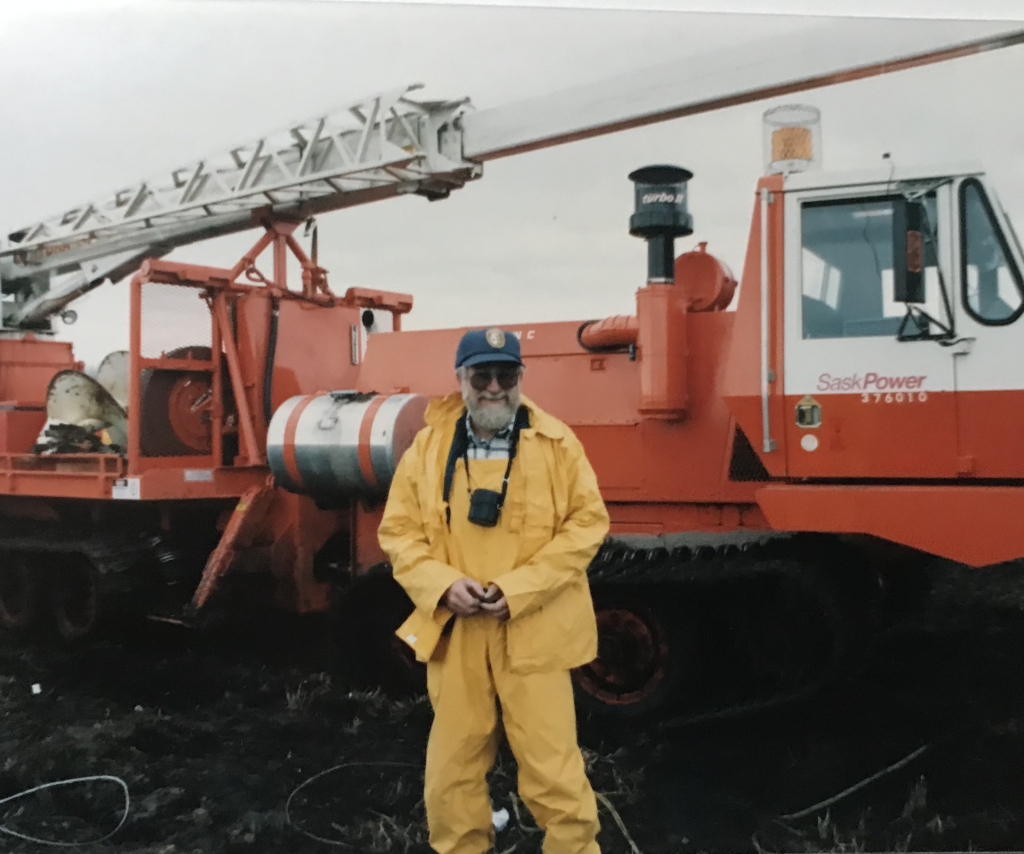
I have attached a few pictures, including a couple of our blue MGB on the way to the ski hill at minus 30c and a roadside picnic. The others, a Rover, Austin and a very modified Mini are at a local car rally plus a couple of work pictures and a Racing Polar Bear..”
Ian Baker Gallery
Click on an image to see it larger.